Gann · Fibonacci · Wyckoff · Elliott Wave

Charting
Decoded Without the Mysticism

Four books that take the classic charting methods seriously enough to actually check them. What each method says, what the evidence supports, and what got invented later — separated out and set straight.

The premise

Most of what's taught about these methods was never in the original work.

Gann, Fibonacci, Wyckoff and Elliott built genuinely useful frameworks for reading price. Then a century of courses, forums and $2,000 seminars buried them under numerology, secret angles and things the authors never wrote.

This series does the unglamorous job: go back to the source, state plainly what each method claims, test the claims that can be tested, and say so when a technique works for an ordinary reason — like enough traders watching the same level — rather than a mystical one.

What survives is smaller than the legend and considerably more useful. That part is worth your time.

The four books

The Evidence-Based
Trading Series

Each book stands alone. Read in any order — or start with the method you've already been sold on.

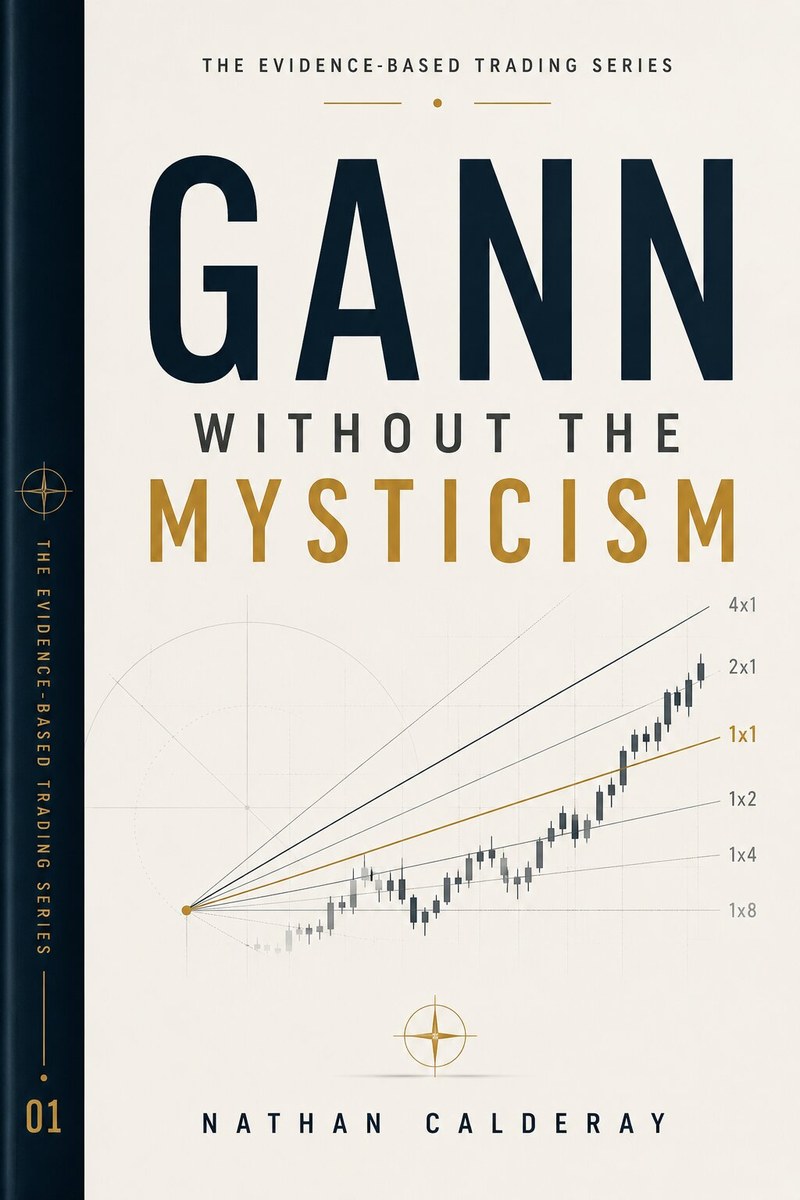
Gann Without the Mysticism, book one of the Evidence-Based Trading Series by Nathan Calderay
Book 01

Gann Without the Mysticism

Angles, squares and the Wheel of 24 — stripped of the astrology and the mythology of the man himself. What Gann actually drew, why a 1×1 line does something a trendline doesn't, and which parts of the legend were retrofitted by people selling courses.

  • Gann angles & fans
  • Squaring price & time
  • The legend, audited
View on Amazon
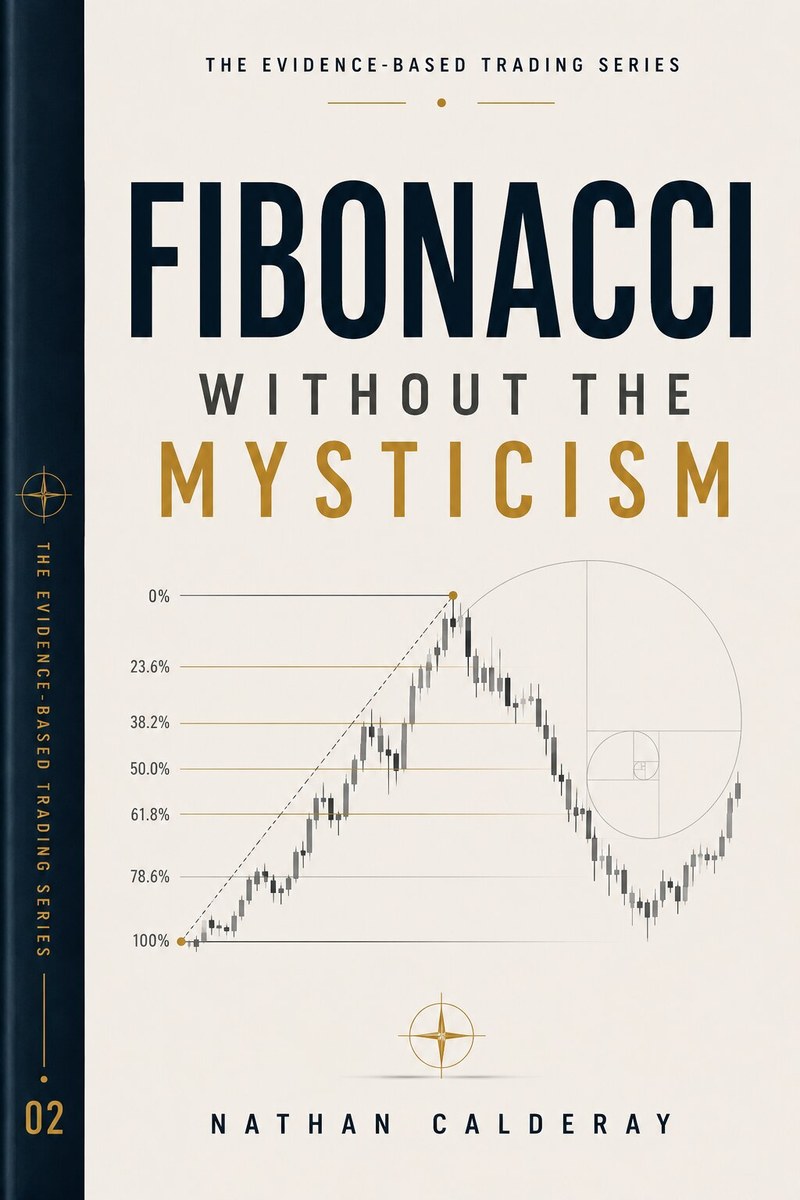
Fibonacci Without the Mysticism, book two of the Evidence-Based Trading Series by Nathan Calderay
Book 02

Fibonacci Without the Mysticism

The golden ratio doesn't govern markets. But .618 still shows up on charts, and the reason is more interesting than the sunflower story: enough traders draw the same levels and act on them. Retracements, extensions and confluence — treated as watched prices, not sacred geometry.

  • Retracements & extensions
  • Confluence
  • Self-fulfilling levels
View on Amazon
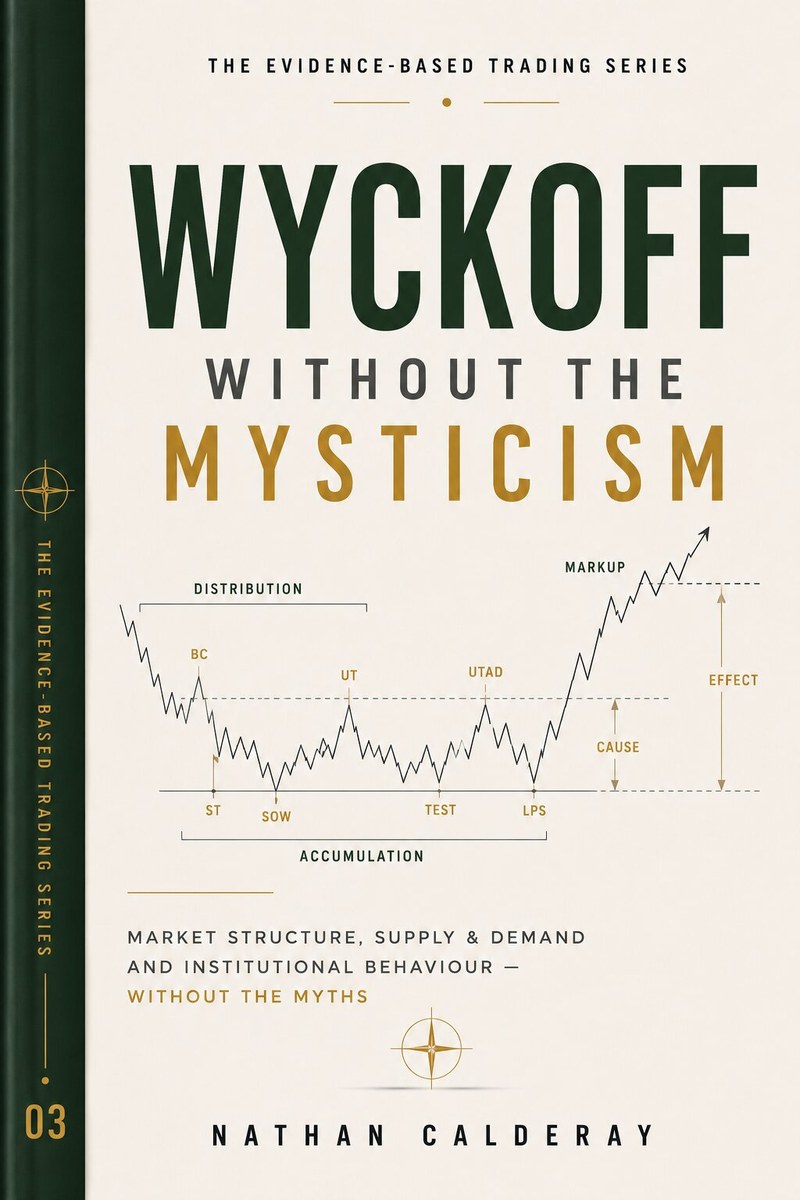
Wyckoff Without the Mysticism, book three of the Evidence-Based Trading Series by Nathan Calderay
Book 03

Wyckoff Without the Mysticism

Accumulation, distribution, springs and upthrusts — the most defensible framework of the four, and the one most often dressed up as mind-reading. Supply and demand, cause and effect, and where "smart money" stops being an observation and starts being a story.

  • Accumulation & distribution
  • Cause & effect
  • Reading the composite operator
View on Amazon
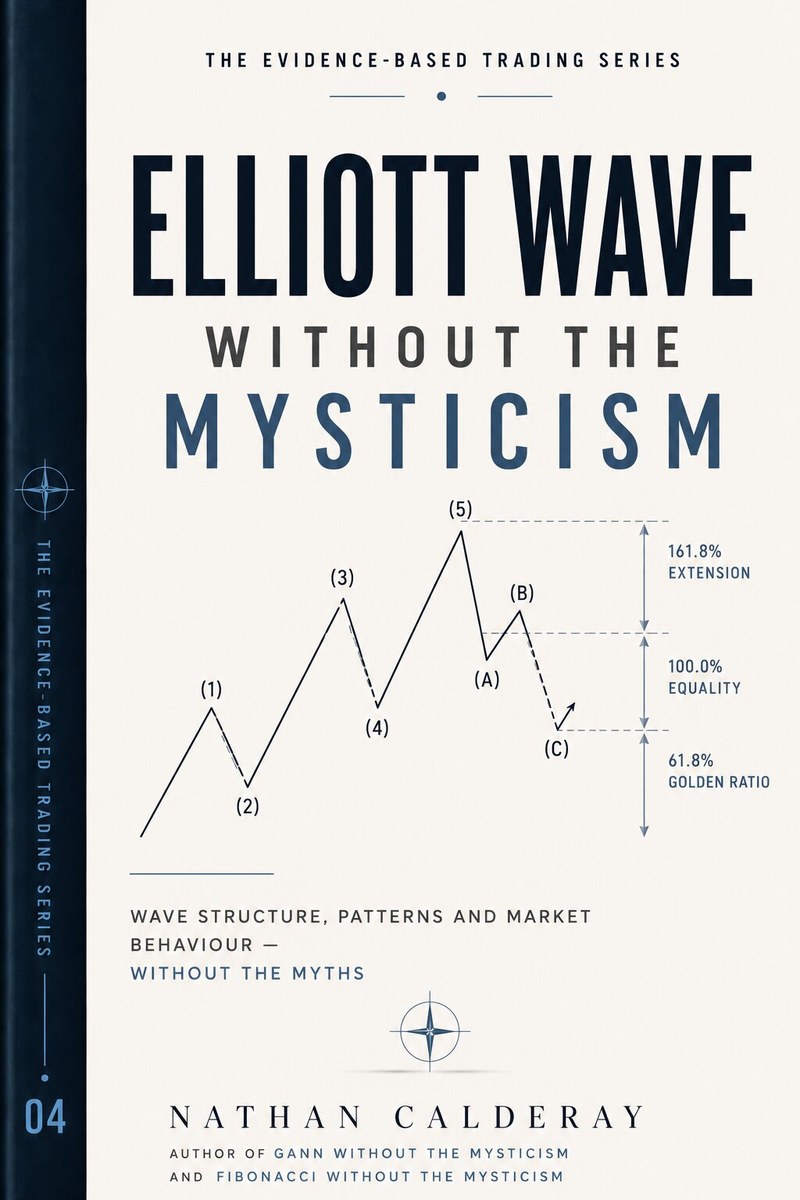
Elliott Wave Without the Mysticism, book four of the Evidence-Based Trading Series by Nathan Calderay
Book 04

Elliott Wave Without the Mysticism

Five up, three down — and the awkward question of why two analysts label the same chart differently. Wave structure taken seriously, including its real weakness: a framework that can be recounted after the fact isn't making a prediction. What's left still describes market behaviour worth knowing.

  • Impulse & corrective structure
  • Wave personality
  • The relabelling problem
View on Amazon
The tools In progress

The indicators,
and how to use them

A small set of TradingView indicators built on the same principle as the books: mark the prices that matter, skip the lagging clutter, and be honest that levels work because people watch them.

  • Floor Pivots — the session's map, drawn clean
  • Fib Trend Confirmation — one line, one question
  • A manual that spends as long on when not to trade

Still being built. It'll appear here when it's ready — until then, the books are the thing.

Read the books
The author

Nathan Calderay

Nathan Calderay writes about technical analysis for people who'd like to know which parts hold up. The Evidence-Based Trading Series came out of a simple frustration: the source material on these methods is mostly good, and almost nobody reads it — they read the fourth-hand version, complete with the embellishments.

The books take each method on its own terms, give it a fair hearing, and then say plainly where the evidence runs out. No secret knowledge, no signals, no promises about returns. Just the methods, decoded.